How to keep a potluck hotdish from turning watery
· Editorial team minneapolisnewschris.com
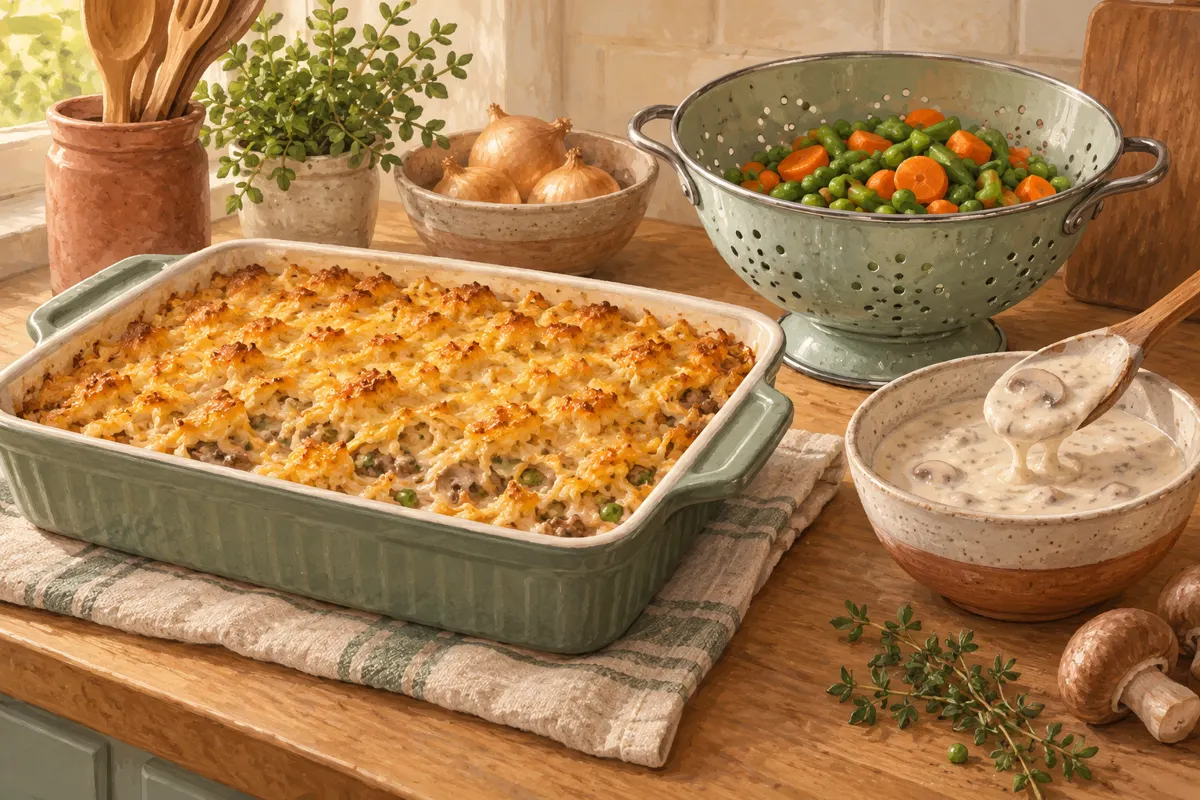
To keep a potluck hotdish from turning watery, control moisture before assembly: drain vegetables, cook off liquid from meat and mushrooms, and use a sauce that coats the filling without pooling. Bake according to your recipe, allow steam to escape during the final stage when appropriate, and let the hotdish settle briefly before packing it for the potluck.
Start with vegetables that will not flood the filling
Frozen vegetables are convenient, but ice and released moisture can loosen a hotdish filling. Canned vegetables bring packing liquid, while fresh mushrooms and zucchini can release water during cooking. The goal is to account for that moisture before everything goes into the baking dish.
Our proposed preparation approach is to remove obvious excess moisture while preserving the recipe’s intended method. If a recipe specifically calls for vegetables straight from the freezer, follow that direction first; its sauce and baking time may already account for them.
- Frozen vegetables: If the recipe allows thawing, drain them in a colander and blot away surface moisture before assembly.
- Canned vegetables: Drain thoroughly instead of tipping the packing liquid into the filling.
- Mushrooms or other moist fresh vegetables: Cook separately until released liquid has largely evaporated.
- Ground meat: Cook as directed and drain excess liquid and grease before adding the sauce.
Check the sauce before adding the topping
A thick-looking sauce can become thin once it meets wet ingredients. Check the combined filling, rather than judging the sauce alone. Stir it together before adding a layer of tots, potatoes or another topping so you can spot a puddle while adjustments are still easy.
For a condensed-soup hotdish, add only the liquid specified in the recipe. Directions for making a bowl of soup do not automatically apply to using that soup in a casserole. Avoid an extra splash of milk simply because the mixture initially looks thick.
For a homemade sauce, finish thickening it on the stove before assembly. A useful consistency check is whether it clings to the ingredients instead of immediately running into the bottom of the bowl. If it is loose, gently reduce it or use the recipe’s thickening method. Adding dry flour directly to an assembled hotdish can leave uneven, floury patches.
Give the filling enough time to bake
A browned topping does not tell you everything about the filling underneath. Use the recipe’s dish size and oven temperature, and check the center as well as the edges. A deeper or more crowded dish can change how evenly the hotdish heats and how readily moisture escapes.
- Spread the filling evenly in the specified baking dish, then arrange the topping as directed.
- Follow the recipe’s covering instructions. A cover retains steam, so leave it off during the finishing stage if the recipe permits.
- If the topping browns before the center is ready, loosely shield the top with foil and continue cooking as directed.
- Once baked, allow a brief uncovered rest so vigorous bubbling subsides before serving or covering for transport.
Resting can help the filling settle, but it cannot correct a large amount of excess liquid. Likewise, prolonged baking may dry the topping before it fixes a very wet base.
Plan transport and warming together
Cover the dish securely for transport once its brief rest is complete. A fitted lid or firmly attached foil helps retain heat. Arrange a separate place for the serving spoon so it does not prevent the cover from closing between servings.
Ask the host ahead of time about oven or warming space. A chafing dish uses a separate water pan beneath the food pan to provide indirect heat; that water belongs underneath the hotdish, not in its filling. Treat buffet warming as a way to hold the finished dish, rather than a way to reduce a watery sauce.
Use this checklist before leaving
- Vegetables are prepared according to the recipe, with excess packing liquid or thawing water removed where appropriate.
- Meat and moist vegetables have no unwanted liquid waiting to enter the sauce.
- The combined filling coats the ingredients without an obvious watery pool.
- The baking dish matches the recipe’s size, and the center has finished cooking.
- The hotdish has rested briefly, and its transport cover fits securely.
- The host knows whether you need oven or warming space.
If the finished hotdish is still loose, avoid stirring through a crisp topping. Serve with a spoon and adjust the moisture preparation next time. Note which ingredients were wet and whether extra liquid went into the sauce; those details give you a practical starting point for the next batch.